A notebook can help you notice a place. It can also become one more place to perform. The difference is often the size of the task.
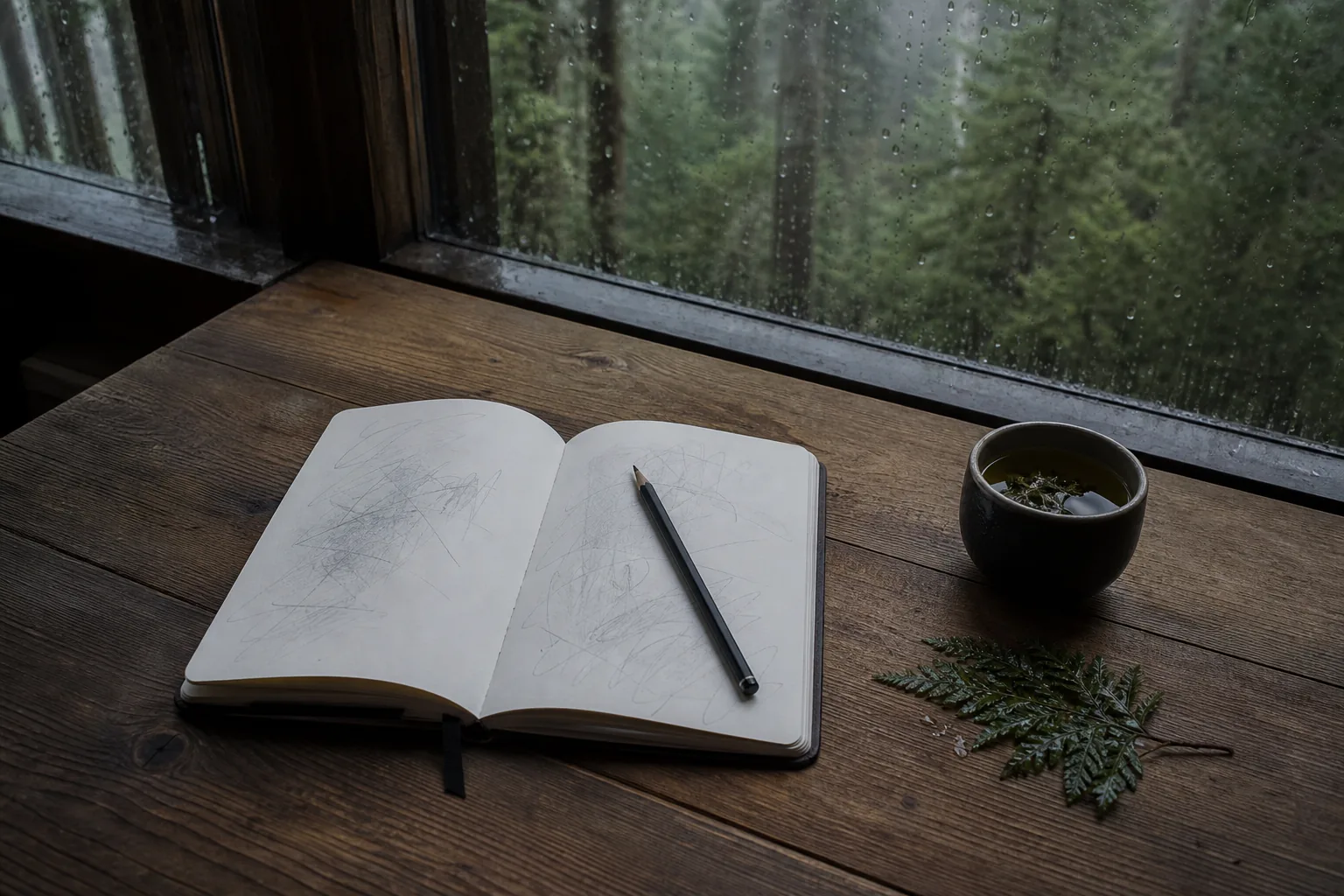
At Stillpoint, the suggested practice is deliberately small: one concrete thing from the morning, one change in the weather and one question worth keeping. There is no daily page count and nothing is collected.
Begin with what is outside you
Observation is easier when it starts with something that does not need interpretation. The path was darker after rain. A thrush stayed close to the dining room window. The lake moved before the wind reached the porch.
Specific details give the mind something stable to return to. They do not ask you to explain the week while you are still inside it.
Write down one thing you could point to. Leave the meaning open.
Use a container that can finish
A useful prompt should have an end. Three lines can finish. A list of five sounds can finish. A page titled with the date can quietly remain half empty.
Keep part of the day unrecorded
Noticing does not require capturing. Leave the phone in the room for one walk. Let the meal end without photographing the table. A record becomes more useful when it is not expected to stand in for the experience itself.
If you take the notebook home, read it after a week. Circle what still feels concrete. The rest can remain where it is.